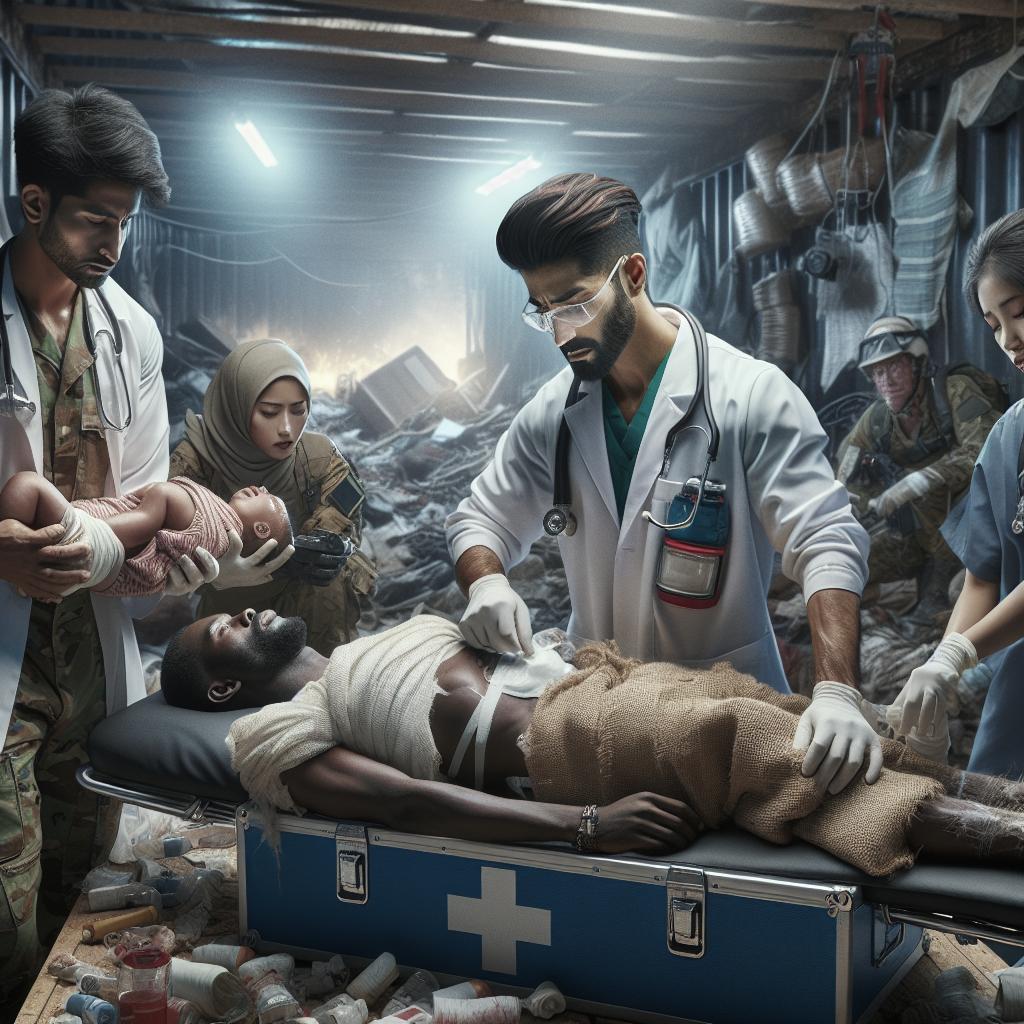
Emergency medicine in humanitarian aid is a field fraught with numerous challenges, yet it remains vital for addressing crises around the world. From conflict zones to regions hit by natural disasters, emergency medical professionals are often the first responders, providing life-saving care amidst chaos. In this blog post, we will explore the multifaceted challenges faced by these heroes of medicine. We’ll touch on the distinction between humanitarian and development work, delve into the role of organizations like Doctors Without Borders (MSF), and discuss the motivation, skills, and educational background required for this line of work. Additionally, we’ll detail the flexibility needed in such roles, introduce some key international NGOs, and provide information on selected tropical medicine courses. Through this exploration, we’ll better understand the landscape of emergency medicine within humanitarian aid and appreciate the complexity of this crucial work.
The difference between humanitarian work and development work
Humanitarian work and development work are often mistaken as synonymous; however, they have different objectives, timelines, and challenges. Humanitarian work involves immediate relief efforts in response to crises such as natural disasters, armed conflicts, or epidemics. The primary aim is to save lives, alleviate suffering, and maintain human dignity during emergencies. These efforts are typically short-term, focusing on rapid response and essential services like medical care, clean water, food, and shelter. Development work, on the other hand, is more long-term and aims at addressing the root causes of poverty and inequality. This type of work is about building sustainable systems that can support a community’s health, education, and economic needs over time. Programs often include infrastructure development, health system strengthening, educational initiatives, and economic development projects. While both humanitarian and development work share a common goal of improving lives, their strategies and methodologies differ significantly. Understanding the distinction between these two types of work is crucial for those involved in emergency medicine within humanitarian aid. This knowledge helps professionals adapt their approach according to the immediate needs of the affected population versus the long-term goals of sustainable development.
A quick primer on Doctors Without Borders (MSF)
Doctors Without Borders, also known by its French name Médecins Sans Frontières (MSF), is a global humanitarian organization providing medical care where it’s needed most. Founded in 1971, MSF operates in over 70 countries, responding to emergencies like armed conflicts, natural disasters, and outbreaks of disease. The organization is renowned for its ability to quickly mobilize resources and personnel to provide high-quality care in some of the most challenging environments. MSF’s work is characterized by its principles of neutrality, impartiality, and independence. These principles ensure that aid is given based on need alone, without consideration for race, religion, or political affiliation. This impartiality is vital for gaining access to conflict zones and other areas where other organizations may be unable to operate. Doctors Without Borders employs a diverse team of international and local staff, including doctors, nurses, logisticians, and mental health professionals, all dedicated to providing comprehensive healthcare services. The organization also emphasizes the importance of bearing witness and advocating for the populations it serves. By documenting the plight of people in crisis and sharing these stories with the world, MSF aims to raise awareness and prompt action from governments and other international bodies. This dual role of providing medical care and advocating for humanitarian issues sets MSF apart as a leader in global emergency medical response.
Motivation for global EM humanitarian work
The motivation behind pursuing a career in global Emergency Medicine (EM) humanitarian work often stems from a deep-seated desire to make a meaningful difference. Many professionals are driven by a commitment to humanitarian principles, seeking to alleviate human suffering and provide care to those most in need. The urgency and impact of the work, knowing that one’s efforts can save lives directly, is a powerful motivator. Furthermore, the unique challenges and varied environments encountered in humanitarian aid can be intellectually and professionally stimulating. These roles offer the opportunity to work in diverse settings, from densely populated refugee camps to remote areas with limited resources. This variability enhances one’s medical skills, adaptability, and problem-solving abilities, making the work both challenging and rewarding. In addition to personal growth, the sense of community and teamwork is another motivating factor. Working closely with a team of like-minded individuals who share the same passion for humanitarian service creates a supportive and inspiring work environment. This camaraderie and shared mission often lead to lasting professional and personal relationships, further enriching the experience.
Personal skills required for global EM humanitarian work
Working in global EM humanitarian settings demands a unique suite of personal skills that go beyond medical competence. Adaptability is crucial; professionals must be able to navigate rapidly changing and often unpredictable environments. This might involve working with limited resources, facing cultural and language barriers, or adapting to different health care systems and practices. Resilience and emotional stamina are equally critical. Humanitarian workers often encounter traumatic situations, such as witnessing severe injuries, loss of life, and the suffering of vulnerable populations. The ability to manage stress and maintain mental health is essential to sustain long-term involvement in such challenging settings. Emotional intelligence, including empathy and compassion, is vital for building trust with patients and local communities. Effective communication skills are also pivotal. Clear and efficient communication is necessary for coordinating with multidisciplinary teams, including local health workers, other NGOs, and community leaders. Professionals must be able to convey critical information concisely and effectively, often across language barriers. Building relationships and collaborating with diverse groups requires cultural sensitivity and the ability to navigate various social dynamics.
Global health experience for humanitarian work
Practical experience in global health is invaluable for those considering a career in EM humanitarian work. Many professionals start by participating in short-term volunteer missions or internships with international NGOs. These opportunities provide firsthand exposure to the complexities and challenges of delivering medical care in resource-limited settings. They also offer insight into the logistical, cultural, and ethical considerations unique to global health work. Field experience helps professionals develop a realistic understanding of what to expect and allows them to build critical skills, such as improvisation and resourcefulness, which are often necessary in under-resourced environments. This kind of exposure also fosters a deeper appreciation for the social determinants of health and the multifaceted nature of humanitarian crises. Networking with experienced professionals in the field is another way to gain valuable insights and guidance. Attending global health conferences, engaging in relevant online forums, and connecting with alumni from global health programs can provide mentorship opportunities and professional development. Building a network of contacts can also open doors to job opportunities and collaborative projects in humanitarian work.
Education for humanitarian work
A solid educational background is essential for professionals looking to excel in EM humanitarian work. While formal medical training is a prerequisite, specialized education in global health, public health, or tropical medicine can provide a more comprehensive understanding of the challenges faced in these settings. Many universities and institutions offer postgraduate programs and courses specifically tailored to humanitarian aid and global health. Programs in public health, for instance, cover topics such as epidemiology, health policy, and health systems management, which are crucial for understanding and responding to health crises on a larger scale. Similarly, courses in tropical medicine focus on diseases prevalent in low-resource settings, equipping professionals with the knowledge to diagnose and treat conditions they may not commonly encounter in their home countries. Continuing education is also important. Professionals should stay updated on the latest research, best practices, and innovations in the field. This continual learning can be achieved through online courses, attending workshops, and participating in professional organizations dedicated to global health and humanitarian work. This ongoing education ensures that professionals are equipped with the latest knowledge and skills to provide the best possible care in challenging environments.
Time/Flexibility in humanitarian work
Time and flexibility are critical components of a successful career in EM humanitarian work. Humanitarian missions often require professionals to be available on short notice and to commit for varying lengths of time, ranging from a few weeks to several months or even years. This demand for flexibility can be challenging to balance with personal and professional commitments back home. Moreover, the unpredictable nature of crises means that work schedules can be erratic, with long hours and little downtime. Professionals must be prepared to work under high-pressure conditions and manage their time effectively to avoid burnout. Flexibility also extends to being adaptable to different living conditions, as accommodations in the field can range from basic to very rudimentary. The ability to commit time and adjust to these demands is often a deciding factor for those choosing to enter or remain in this field. For many, the rewards of making a tangible difference in people’s lives outweigh the personal and professional sacrifices required.
Some International NGOs
Numerous international non-governmental organizations (NGOs) play pivotal roles in providing humanitarian aid across the globe. Beyond Doctors Without Borders (MSF), organizations such as the International Committee of the Red Cross (ICRC), CARE International, and Save the Children are significant contributors to emergency medical care and humanitarian relief efforts. The International Committee of the Red Cross (ICRC) focuses on protecting and assisting victims of armed conflict and ensuring that international humanitarian laws are respected. Their work includes providing medical care, facilitating the exchange of family messages, and improving water and sanitation conditions in conflict zones. CARE International works to fight global poverty and provide disaster relief. Their healthcare initiatives often target women’s and children’s health, addressing issues like maternal health, malnutrition, and access to clean water and sanitation. Save the Children operates in a variety of emergency contexts, from conflict zones to areas affected by natural disasters. They provide critical health services, nutrition programs, and education initiatives to improve the well-being of children and their families. These organizations exemplify the diverse and multifaceted nature of humanitarian aid, each bringing unique strengths and areas of focus to their work.
Selected tropical medicine courses
For professionals interested in EM humanitarian work, specialized training in tropical medicine can be highly beneficial. Several institutions and universities worldwide offer courses tailored to equip healthcare workers with the knowledge and skills needed to address tropical diseases and health issues prevalent in low-resource settings. The London School of Hygiene & Tropical Medicine offers a renowned Diploma in Tropical Medicine and Hygiene (DTM&H). This intensive course covers the diagnosis, treatment, and prevention of tropical diseases, providing hands-on training and field experience. Johns Hopkins University offers a Certificate in Tropical Medicine aimed at physicians and healthcare professionals. This program combines classroom instruction with practical laboratory and fieldwork, focusing on diseases like malaria, tuberculosis, and HIV/AIDS. The Gorgas Institute in Peru provides a Clinical Tropical Medicine Course designed for medical professionals. The course includes clinical rounds, lectures, and field trips, giving participants a comprehensive understanding of tropical medicine in a real-world context. These courses not only enhance clinical skills but also prepare professionals for the unique challenges of working in tropical and resource-limited environments.
Leave A Comment Cancel reply
Informed and passionate professionals are indispensable in the realm of emergency medicine and humanitarian aid. A clear understanding of the differences between humanitarian and development work, the guiding principles of organizations like Doctors Without Borders (MSF), and the personal motivations for this line of work can help shape a fulfilling career. The requisite skills, global health experiences, and specialized education are all crucial components to thrive in these demanding yet immensely rewarding roles. Flexibility in time management and familiarity with key international NGOs enrich the overall preparedness for those venturing into this field. Finally, additional training, such as tropical medicine courses, augments one’s capability to address the specific challenges encountered in various global settings. Feel free to share your thoughts and experiences in the comments below. Your insights can be invaluable to others who are navigating this challenging yet rewarding path. “`html
| Aspect | Details |
|---|---|
| Humanitarian vs. Development Work | Immediate relief vs. long-term sustainable development |
| Doctors Without Borders (MSF) | Neutrality, impartiality, independence; rapid response, advocacy |
| Motivation | Humanitarian principles, professional growth, community and teamwork |
| Personal Skills | Adaptability, resilience, emotional intelligence, communication |
| Global Health Experience | Practical field experience, networking, mentorship |
| Education | Training in global health, public health, tropical medicine, continuing education |
| Time/Flexibility | Short notice availability, long hours, adaptable living conditions |
| International NGOs | ICRC, CARE International, Save the Children |
| Tropical Medicine Courses | London School of Hygiene & Tropical Medicine, Johns Hopkins University, Gorgas Institute |
“`
Leave a Reply